
Hello, Welcome to my blog, my name is Godstime. Before we begin, let me tell you a quick story.
When I created my first blog, I didn’t spend hours researching blogging platforms to use. Nope. I picked one randomly because someone in a forum I visited said, “It’s free and easy to use.”
It sounded good to me.
Three months later, I discovered something frustrating: the platform had terrible SEO options, limited customization, and I couldn’t even properly monetize my content.
So guess what I had to do?
I rebuild the entire blog from scratch.
If you’ve ever migrated a website from one platform to another before. You know it’s about as fun as moving houses in the rain.
That painful experience taught me a lesson I wish someone had told me earlier: choosing the right blogging platform matters more than most beginners even realize.
The blogging platform you choose affects everything from:
-
How easy it is to write posts
-
Whether your blog can rank on Google
-
How you monetize your content
-
And how your website grows over time
So if you’re planning to start a blog, or you’re thinking about switching platforms this guide will walk you through the best blogging platforms available today, along with the pros, cons, and who each one is best for.
And yes, I have tested most of them the hard way.
What Makes a Good Blogging Platform?
Before I talk about specific platforms, let me quickly discuss what actually makes a blogging platform worth using.
Because honestly I will tell you, not all platforms are built with serious bloggers in mind.
Here are the things I personally look for.
Ease of Use
If publishing a blog post feels like solving a math equation, that platform probably isn’t beginner-friendly blogging platform.
You want something that lets you focus on writing, not wrestling with complicated settings and other stuffs.
SEO Capabilities
If your goal is to get traffic from Google, your platform must support SEO features like:
-
Custom meta titles
-
Meta descriptions
-
Clean URL structures
-
Fast page speed
Without these, ranking becomes significantly harder for your blog.
Monetization Options
Some platforms restrict how you make money, that’s the honest truth.
For example, certain free platforms don’t allow affiliate marketing or you to run ads on your blog.
That’s a big problem if your goal is turning blogging into passive income.
Customization
Your blog should grow with you.
For instance maybe today you just want a simple blog. But later you might want to add:
-
Email newsletters
-
Membership areas
-
Online courses
Your platform should support that growth, without stressing you. Now let’s begin
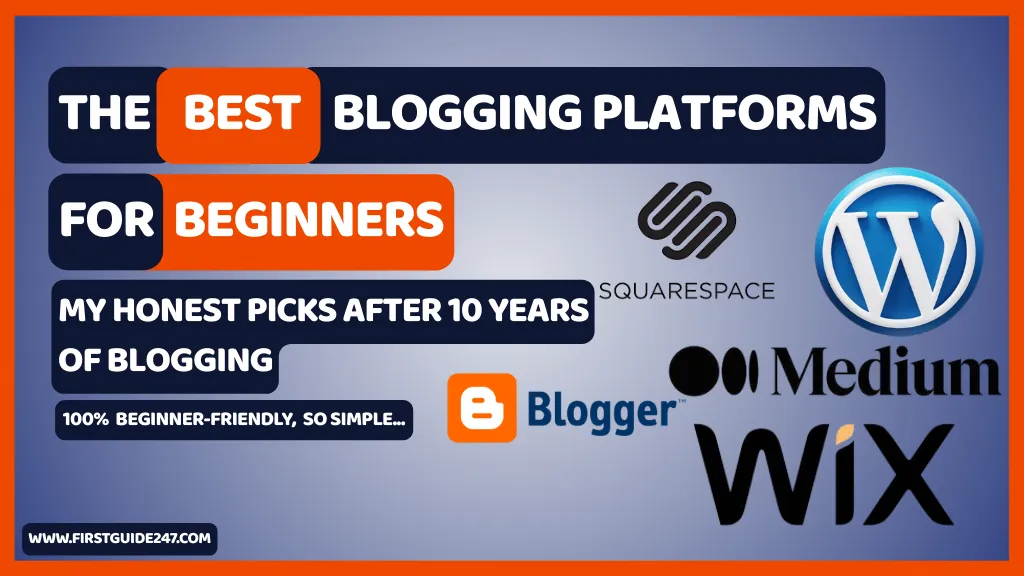
1. WordPress.org (The Most Powerful Blogging Platform)
If blogging had a “gold standard,” WordPress would probably hold that title.
WordPress powers over 40% of websites on the internet, which is honestly a ridiculous number when you think about it.
That means almost half the internet runs on WordPress.
Why WordPress Is So Popular
The biggest advantage of WordPress is flexibility.
With WordPress, you can customize almost anything on the platform.
You get access to:
-
Thousands of themes
-
Over 50,000+ plugins
-
Advanced SEO tools
-
Full control of your website
My current blog (FirstGuide247.com) runs on WordPress, and one reason is the ecosystem.
For example, if I want to add:
-
An SEO plugin
-
AI writing tools
-
Email marketing integration
-
Membership features
There’s usually a WordPress plugin that handles it.
The Learning Curve
I won’t lie, WordPress can feel slightly overwhelming when you’re new to it. But it becomes very easy to ease to use and understand as you use it.
I remember at one time I was staring at the WordPress dashboard thinking, “Okay… where do I even start from?”
But after a few days of experimenting, things start to make sense to me.
Once you get comfortable with it, WordPress becomes incredibly powerful to use.
If you’re planning to build a serious blog that can will eventually make you money, WordPress is often the best choice. No doubt about it.
2. Blogger (The Classic Beginner Platform)
Ah, Blogger, the old master. Most people into blogging must have used or heard about it, in their early journey of blogging.
This platform has been around for a long time.
In fact, many people including me started blogging here years ago. This is where I built my first Blog.
Blogger is owned by Google, which gives it a certain level of reliability.
Why Beginners Choose Blogger
Blogger is extremely easy to start and use.
You can literally create a blog in about 10 minutes.
No hosting setup. No complicated installations.
Just sign in with your Google account and start publishing. It’s that easy.
That simplicity makes Blogger attractive for beginners who want a quick start with no upfront cost.
The Downsides
However, Blogger has some limitations.
Customization options are fairly limited compared to WordPress.
And while Blogger blogs can rank on Google, advanced SEO features aren’t as powerful.
That’s why many bloggers eventually migrate away from Blogger as their websites grow to a certain stage.
In fact, I wrote a detailed comparison between these two platforms in my guide: WordPress vs Blogger: Which Is Better for Beginners?
If you’re deciding between them, that article breaks things down very clearly.
3. Medium (Best for Writing Without Technical Stress)
Medium is an interesting blogging platform you might have come across.
Instead of building your own website, you publish content on Medium’s platform.
This means you don’t worry about:
-
Website hosting
-
Design
-
Technical maintenance
You simply just write and publish.
Why Some Writers Love Medium
Medium already has a built-in audience.
Your article might be recommended to readers even if you don’t have followers yet.
That’s something most independent blogs don’t offer.
A writer could publish an article and suddenly receive thousands of views if the algorithm promotes it. It’s like Facebook and Instagram but for bloggers.
The Limitation
But there’s a catch.
You don’t truly own the platform.
Your content lives on Medium’s ecosystem.
If Medium changes its policies, your entire blog presence depends on their decisions.
That’s why many serious bloggers prefer having their own websites.
4. Wix (Best for Visual Blog Design)
Wix is known for its drag-and-drop website builder.
Everything happens visually.
Want to move a text box? Just drag it. Want to change colors? Click and adjust it easy to use.
Why Wix Appeals to Beginners
It’s incredibly beginner-friendly.
I once helped a small business owner build a blog section on their Wix site in about two hours.
No coding required.
The platform includes:
-
Beautiful templates
-
Built-in hosting
-
Easy design customization
The Limitation that comes with wix
However, Wix can feel slightly restrictive for advanced bloggers.
SEO customization and performance optimization aren’t as flexible as WordPress.
Still, for beginners who prioritize simplicity, Wix can work well for you.
5. Squarespace (Best for Clean, Professional Design)
Squarespace is often chosen by creative professionals.
Photographers, designers, and artists usually love using it’s design templates.
And honestly I will admit, they do look very great.
What Makes Squarespace Attractive
The templates are polished and modern.
Even if you don’t know anything about design, your blog will probably look professional.
Squarespace also includes:
-
Built-in hosting
-
Blogging tools
-
E-commerce features
Everything is integrated.
Squarespace Trade-off
Customization can be limited compared to using WordPress.
You’re working within the structure of Squarespace templates.
But if you prioritize aesthetics over deep customization, it’s a solid platform.
The Blogging Mistake That Cost Me Months
Let me share a mistake that still makes me shake my head, anytime I think about it.
When I started blogging, I focused more on design than content, I actually put out.
I spent days adjusting fonts, layouts, colors… everything. Anything to make my website look very very good.
Meanwhile, I had only published just three articles.
Three, I tell you.
That’s when someone told me something that stuck with me.
“Your blog design doesn’t matter if you don’t have content to engage your readers.”
That advice changed how I approached blogging.
Now I focus on publishing helpful content consistently rather than obsessing over tiny design details.
Which Blogging Platform Should You Choose?
Here’s a simple guideline for you.
Choose WordPress if you want long-term growth and full control of your blog.
Use Blogger if you want a simple free blogging platform with little to no upfront cost.
Choose Medium if you just want to focus on just writing your content.
Use Wix if you want a beginner-friendly drag-and-drop builder.
And choose Squarespace if design aesthetics are your priority.
Each platform serves a slightly different purpose from each other.
My Personal Recommendation After 10 Years
If your goal is to build a blog that can:
-
Grow traffic
-
Rank on Google
-
Make you good money
Then WordPress is usually the best choice for you.
It offers the most flexibility and scalability for your blog tom grow.
Most successful bloggers Like Ferdy, Adam Enfroy eventually end up using WordPress for that reason.
My Final Thoughts
Starting a blog is one of the best decisions you can make online.
A blog can become:
-
Your personal brand
-
Your business platform
-
Your income source
But everything starts with choosing the right blogging platform.
Take your time. Choose wisely. And focus on creating helpful content.
If you’re planning to start a blog, you may also want to read some of my other guides:
These articles will help you grow your blog and turn it into something meaningful.
And now I would like to hear from you.
Which blogging platform are you thinking about using?. Is it WordPress?, Blogger? or another.
Leave a comment below if you have any questions related to this topic or the blog post, and I will be happy to assist you. Thank you for reading and see you on the next one.